Why Light Therapy Alone Fails for Seasonal Affective Disorder: What to Do Instead
Tags: Seasonal Affective Disorder, SAD treatment, light therapy limitations, cognitive behavioral therapy for SAD, winter depression, telepsychiatry for SAD, depression prevention, mental health in fall, CBT vs light therapy, winter blues vs SAD

In brief
Light therapy is the gold standard for treating Seasonal Affective Disorder (SAD), but research shows it’s not enough to prevent future episodes. Discover why starting cognitive behavioral therapy (CBT) in late summer or early fall can help break the cycle of winter depression.
Key takeaways
- Light therapy is effective for acute SAD symptoms but requires daily use and doesn’t prevent future episodes.
- Cognitive Behavioral Therapy (CBT) tailored for SAD produces better long-term outcomes than light therapy alone.
- SAD is a recurring major depression with seasonal patterns, not just a temporary mood dip.
- Late summer or early fall is the best time to start preventive treatments like CBT.
- Symptoms of SAD include hypersomnia, carbohydrate cravings, fatigue, and social withdrawal.

Seasonal Affective Disorder: Why Light Therapy Alone Isn't the Answer — and What to Start Before Fall
SAD affects roughly 14.5 million Americans for about five months a year. Light therapy is the best-known treatment — but a landmark trial found something better for preventing next winter's episode.
Every year it arrives roughly on schedule. Sometime after the clocks change, the alarm starts feeling impossible. You sleep more and wake less rested. You want carbohydrates constantly. Work takes twice the effort it did in September, you cancel plans you'd normally enjoy, and a low grey flatness settles in that doesn't quite lift until March or April — when, just as predictably, it does.
If that pattern is familiar, you're describing something clinicians have understood since 1984, when Norman Rosenthal and colleagues first characterized it. Winter seasonal affective disorder affects about 5% of the U.S. population — roughly 14.5 million people — and produces substantial depressive symptoms for approximately five months of each year, in most years, typically beginning in young adulthood. Another 9% or so experience a subsyndromal version that doesn't meet full criteria but still meaningfully affects functioning.
Most advice on SAD stops at "get a light box." Light therapy is genuinely effective and it is the best-evidenced acute treatment available — but that advice is incomplete in a way that matters. Light therapy remits acute symptoms in roughly half of cases, requires daily use from the first symptom through spring remission every single year, and long-term adherence to that regimen is poor. And a rigorously designed head-to-head trial found that a SAD-tailored form of cognitive behavioral therapy produced substantially better outcomes two winters later.
That distinction — treating this winter versus preventing the next one — is the most useful thing to understand about SAD, and it's the reason late summer and early fall are the right time to read this rather than December.
What Is Seasonal Affective Disorder?
Seasonal affective disorder is recurrent major depression that follows a seasonal pattern — most commonly depressive episodes beginning in late fall or winter that remit in spring. In the DSM-5-TR it is not a standalone diagnosis but a "seasonal pattern" specifier applied to major depressive disorder or bipolar disorder.
That technical detail has a practical consequence worth knowing: because SAD is a pattern rather than a separate illness, diagnosing it requires establishing that the seasonal timing has held across multiple years and that non-seasonal episodes haven't outnumbered seasonal ones. A single hard winter isn't SAD. A reliable annual pattern, at the same time of year, that lifts in spring, is.
A summer-pattern version also exists but is far less common — pooled prevalence around 0.6% — and presents differently, more often with insomnia, poor appetite, weight loss, and agitation rather than the sleepiness and carbohydrate craving of winter SAD.
Geography matters measurably. A systematic review and meta-analysis of global prevalence by latitude found a significant positive association between latitude and SAD rates — higher-latitude regions with shorter winter daylight show higher prevalence. Estimates in the U.S. range from under 1% to nearly 10% depending on location and how it's measured, with New Hampshire studies finding rates near 9.7% against roughly 1.4% in Australia.
What's the Difference Between Winter Blues and SAD?
The winter blues involve mild seasonal dips in mood and energy that you can work around. SAD is a diagnosable major depressive episode — it significantly impairs functioning, lasts most of the day nearly every day for weeks to months, and doesn't resolve just by pushing through.
✓ Winter Blues (Subsyndromal)
- Somewhat lower energy and mood in winter months
- Still able to work, socialize, and manage responsibilities
- Enjoyment is reduced but not absent
- Responds reasonably to daylight, exercise, and activity
- No thoughts of self-harm
- Real and worth addressing — but not a depressive episode
⚠️ Seasonal Affective Disorder
- Meets full criteria for a major depressive episode
- Significant impairment at work, home, or in relationships
- Loss of interest or pleasure in nearly everything
- Persists most of the day, nearly every day, for weeks or months
- May include hopelessness or thoughts of death or suicide
- Recurs in a predictable seasonal pattern across years
What Are the Symptoms of Winter SAD?
Winter SAD characteristically produces "atypical" depressive features — sleeping too much, increased appetite with strong carbohydrate cravings, weight gain, and heavy fatigue — alongside the core symptoms of depression. This is close to the opposite of the insomnia and appetite loss seen in many non-seasonal depressive episodes.
Hallmark Seasonal Features
- Hypersomnia — sleeping considerably more, still tired
- Increased appetite, particularly carbohydrate craving
- Winter weight gain that reverses in spring
- Heavy, leaden fatigue; limbs feeling weighted
- Difficulty waking, especially on dark mornings
- Social withdrawal — the "hibernation" pattern
Core Depressive Symptoms
- Persistent low mood most of the day, nearly every day
- Loss of interest or pleasure in usual activities
- Difficulty concentrating or making decisions
- Feelings of worthlessness or excessive guilt
- Irritability and reduced frustration tolerance
- Thoughts of death or suicide — always a reason to seek help now
The atypical pattern is diagnostically useful. If your low periods come with insomnia and appetite loss, that's a different picture than SAD's oversleeping and carbohydrate craving, and it's worth mentioning specifically to a clinician — it changes what's likely and what's likely to help.
What Causes Seasonal Affective Disorder?
The leading explanation is the phase-shift hypothesis: as winter days shorten, the body's internal circadian clock drifts out of alignment with the actual sleep-wake schedule, and that misalignment drives the depressive symptoms. Altered serotonin and melatonin signaling are also implicated.
Under the phase-shift model, reduced morning light in autumn and winter allows the internal clock to run later than the day requires. The resulting mismatch between biological timing and clock time is thought to produce the mood, sleep, and energy disturbances. This is not just a theory of cause — it's the reason light therapy is administered in the early morning rather than whenever is convenient. Correcting circadian phase is light therapy's established mechanism and target.
The original evidence for this came from Rosenthal's founding research, which found that exposing people with winter SAD to bright light — effectively extending their daylight exposure — improved depressive symptoms. Everything since has refined that finding rather than overturned it.
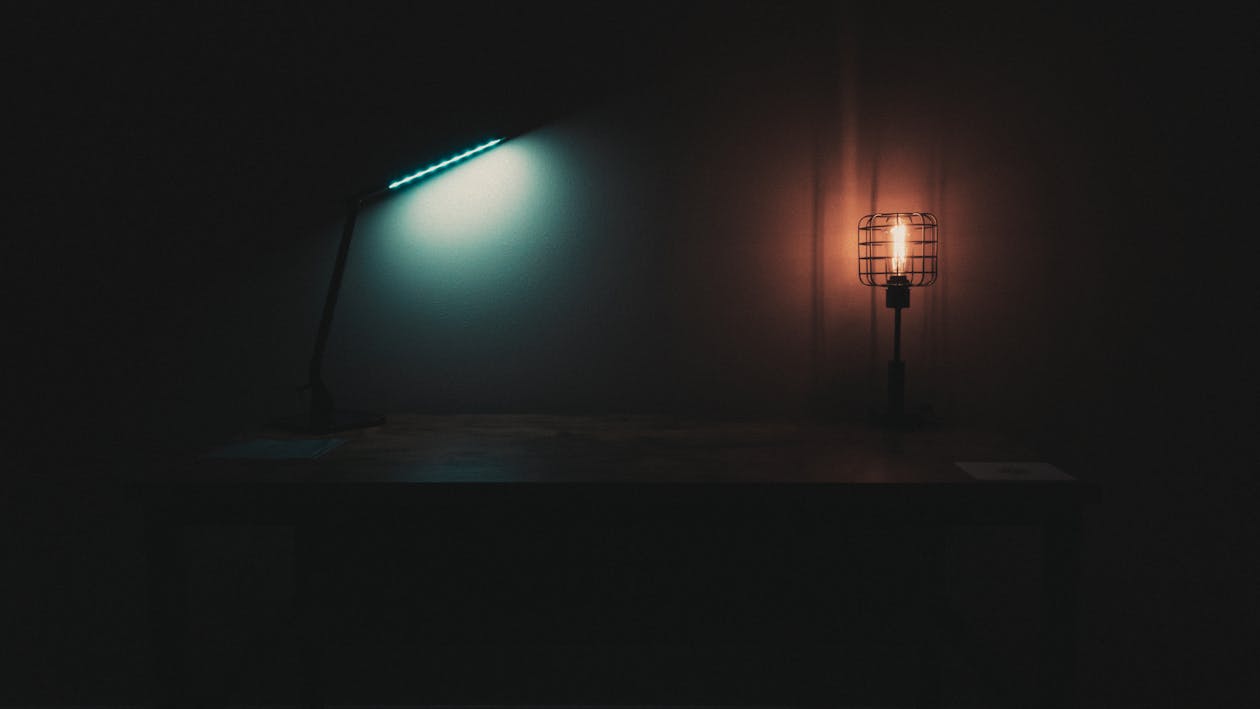
Light therapy is not the same as having bright lamps around. The clinical protocol specifies intensity, timing, duration, and distance — and the details determine whether it works. An ordinary room lamp doesn't come close to the required output.
Does Light Therapy Actually Work for SAD?
Yes — light therapy is the best-evidenced acute treatment for winter SAD. A meta-analysis of 19 randomized trials found bright light therapy superior to placebo for depression ratings and for treatment response. It remits acute symptoms in roughly half of cases. Its main limitation is durability: it works while you use it, and daily adherence across a whole winter is difficult.
The meta-analytic evidence is solid but not miraculous — a standardized mean difference of −0.37 for depression ratings and a risk ratio of 1.42 for treatment response across 19 trials, with the authors noting moderate heterogeneity and moderate-to-high risk of bias in the underlying studies. Light therapy remits acute symptoms in about 53% of SAD cases. That's a genuinely useful treatment and an honest ceiling.
On wavelength: a 2025 network meta-analysis found white light most effective for alleviating seasonal mood symptoms, followed by green, blue, and red. Blue-enriched light has been studied extensively and has its advocates, but white light at standard intensity remains the best-supported default.
The Standard Light Therapy Protocol
That last line is where the practical problem lives. Guideline-concordant use means daily light therapy for roughly five months annually, indefinitely, restarting every autumn. Long-term compliance with that is documented as poor — which is precisely what motivated researchers to look for something with effects that persist after treatment stops.
The Finding That Changes the Advice: CBT-SAD vs. Light Therapy
Kelly Rohan and colleagues at the University of Vermont ran an NIMH-funded randomized head-to-head trial comparing light therapy against a SAD-tailored group cognitive behavioral therapy (CBT-SAD), then followed participants across the next two winters. Results were published in the American Journal of Psychiatry.
At the end of acute treatment, the two were comparable. The difference emerged later — and it was substantial:
The authors concluded that CBT-SAD was superior to light therapy two winters after acute treatment, indicating greater durability. Notably, at the first follow-up winter the two groups were similar (28.9% vs. 24.9% recurrence) — the advantage compounded over time rather than appearing immediately.
The practical reading: light therapy treats this winter well. CBT-SAD appears to change the trajectory of future winters — which matters enormously for a condition defined by returning every single year. This is also why the two are frequently used together rather than treated as competitors.
What Are the Treatment Options for SAD?
Bright Light Therapy
10,000 lux, 30 minutes each morning, started at first symptoms and continued through spring. Remits acute symptoms in roughly half of cases and often works within 1–3 weeks. Inexpensive, non-pharmacological, and the standard first line — with the caveat that benefit stops when use stops.
CBT-SAD
A SAD-tailored cognitive behavioral therapy addressing the thoughts and behavioral withdrawal that maintain winter depression. Comparable to light therapy acutely, superior two winters later. Time-limited — a course of treatment rather than a daily commitment every winter for life.
Antidepressant Medication
SSRIs and SNRIs are effective for SAD. Bupropion XL is specifically FDA-approved for preventing seasonal depressive episodes and is typically started in autumn before symptoms begin, then tapered in spring. A prescriber can advise on fit, timing, and whether prophylactic use makes sense given your history.
Morning Outdoor Light
Even on overcast days, outdoor light vastly exceeds indoor lighting. A morning walk delivers meaningful light exposure plus exercise, which independently helps depression. Free, and worth building into the routine before you need it.
Sleep & Activity Scheduling
Consistent wake times stabilize circadian timing — the system SAD disrupts. Deliberately scheduling pleasurable and social activities counters the withdrawal that deepens winter depression; this behavioral activation is a core component of CBT-SAD.
Combined Approaches
Light therapy and CBT-SAD are frequently combined, as are light therapy and medication. In earlier work, CBT combined with light therapy showed recurrence rates comparable to CBT alone, both well below light therapy alone. A clinician can help sequence these to your pattern.
⚠️ Before You Buy a Light Box: Safety Considerations
Light therapy is generally well tolerated, but it isn't risk-free for everyone, and a light box is sold as a consumer device with no clinical gatekeeping. Talk to a clinician first if any of these apply:
- You have or may have bipolar disorder. This is the most important one. Light therapy can trigger manic or hypomanic episodes, and seasonal patterns occur in bipolar disorder too. If you've had periods of elevated mood, decreased need for sleep, or unusual energy, get evaluated before starting light therapy.
- You have an eye condition — retinal disease, macular degeneration, diabetic retinopathy, or a history of eye surgery. Ophthalmology input is warranted.
- You take photosensitizing medications — certain antibiotics, antipsychotics, lithium, St. John's wort, and some acne medications increase light sensitivity.
- Common side effects include headache, eye strain, nausea, and irritability. These often resolve by reducing session length or increasing distance from the device.
Also worth knowing: light boxes are not regulated as medical devices in the U.S., so quality and lux claims vary considerably between products. Look for 10,000 lux at a specified distance and UV filtration.
When Should You Start Treatment for SAD?
Before symptoms begin — typically late summer or early fall for a winter pattern. Because SAD is predictable, it's one of the few depressive presentations that can be genuinely prepared for rather than reacted to. Waiting until December means treating an established episode instead of preventing one.
Assess and plan
If you've had two or more winters with this pattern, this is the window for an evaluation — confirming the diagnosis, ruling out other causes, and deciding on an approach while you're well enough to make good decisions about it.
Start before you feel it
Prophylactic medication (where indicated) is typically started before symptom onset. Light therapy is often begun at the first sign of symptoms or, for those with a very consistent pattern, slightly ahead of it. Establish morning routines now, while daylight makes them easy.
Maintain through the season
Daily consistency matters more than intensity of effort. This is also when a time-limited CBT-SAD course is typically delivered, building skills that carry into subsequent winters.
Taper deliberately
Discontinuation of light therapy or seasonal medication is planned with a clinician as spring remission arrives — not stopped abruptly on the first warm day.

Outdoor light on an overcast winter day still dramatically exceeds typical indoor lighting. A morning walk delivers light exposure and exercise together — modest on its own, genuinely useful as part of a plan.
"For a condition that returns on schedule every year, the question worth asking isn't only what helps this winter — it's what changes the shape of the next one."
— Synthesized from SAD treatment research, 1984–2026Common Questions
No. Typical indoor lighting runs roughly 100–500 lux, while the clinical protocol calls for 10,000 lux at a specified distance. The gap is enormous, and it's the intensity combined with morning timing that produces the circadian effect. A brighter room is pleasant but isn't light therapy.
Many people notice improvement within one to three weeks of consistent daily morning use, and clinical trials commonly run up to six weeks. If you've used it correctly and consistently for several weeks without meaningful change, that's a reason to talk to a clinician rather than to keep waiting — about half of people don't achieve remission with light therapy alone.
Vitamin D deficiency is common in winter and worth testing and correcting for general health reasons, but evidence that supplementation treats SAD specifically is weak and inconsistent. It is not a substitute for light therapy, CBT-SAD, or medication. Treat a deficiency if you have one; don't rely on it as SAD treatment.
Latitude genuinely correlates with prevalence, and some people improve substantially after relocating. But it isn't a guaranteed fix — people carry vulnerability with them, and research indicates those who move from lower to higher latitudes become more susceptible, which cuts both ways. It's a reasonable factor in life decisions, not a treatment plan.
It's a recognized clinical entity — a seasonal-pattern specifier for recurrent major depressive disorder in the DSM-5-TR, with decades of research behind it, established treatments, and measurable prevalence patterns tied to latitude. The distinction from ordinary winter dislike is functional impairment meeting full criteria for a depressive episode.
That depends on the approach. Light therapy and seasonal medication are typically used annually during the vulnerable months. CBT-SAD is time-limited by design — a course of treatment building skills intended to reduce recurrence in later winters, which is precisely why the two-winter follow-up data on durability matters when choosing.
⚠️ If Winter Brings Thoughts of Suicide or Self-Harm
SAD is a form of major depression, and it carries the same risks. Thoughts of death or self-harm are a symptom that warrants immediate support — not something to wait out until spring.
Call or text 988 — Suicide & Crisis Lifeline, available 24/7. | Crisis Text Line: Text HOME to 741741.
If there is immediate danger, call 911 or go to the nearest emergency room.
The Best Time to Prepare for Winter Is Before It Arrives
If the same months hit you the same way every year, you don't have to wait for December to do something about it. Board-certified evaluation via secure telehealth, most insurance accepted.
Book an EvaluationMost major insurance plans accepted | Same-week appointments available | Crisis: call or text 988
Sources & Further Reading
- Rohan KJ, et al. Outcomes One and Two Winters Following Cognitive-Behavioral Therapy or Light Therapy for Seasonal Affective Disorder. American Journal of Psychiatry. 2016. pubmed.ncbi.nlm.nih.gov
- Rohan KJ, et al. Randomized Trial of Cognitive-Behavioral Therapy Versus Light Therapy for Seasonal Affective Disorder: Acute Outcomes. American Journal of Psychiatry. psychiatryonline.org
- Rohan KJ, et al. Cognitive-behavioral therapy vs. light therapy for preventing winter depression recurrence: study protocol for a randomized controlled trial. Trials. 2013;14:82. pmc.ncbi.nlm.nih.gov
- Munir S, Gunturu S, Abbas M. Seasonal Affective Disorder. StatPearls. NIH/NCBI Bookshelf, 2026. ncbi.nlm.nih.gov
- Pjrek E, et al. The Efficacy of Light Therapy in the Treatment of Seasonal Affective Disorder: A Meta-Analysis of Randomized Controlled Trials. Psychotherapy and Psychosomatics. pubmed.ncbi.nlm.nih.gov
- Global prevalence of seasonal affective disorder by latitude: a systematic review and meta-analysis. Journal of Affective Disorders. 2025. sciencedirect.com
- Wan Y, Ding J, Fan M, Huang H. Effectiveness of visible light for seasonal affective disorder: a systematic review and network meta-analysis. Medicine. 2025;104(27):e43107. pubmed.ncbi.nlm.nih.gov
- Do A, Li VW, Huang S, et al. Blue-Light Therapy for Seasonal and Non-Seasonal Depression: A Systematic Review and Meta-Analysis of Randomized Controlled Trials. Canadian Journal of Psychiatry. 2022. ncbi.nlm.nih.gov
- Treatment measures for seasonal affective disorder: a network meta-analysis. Journal of Affective Disorders. 2024. sciencedirect.com
- Medscape. Seasonal Affective Disorder (SAD): Background, Pathophysiology, Epidemiology. emedicine.medscape.com
- Psychiatric News. CBT May Lead to Longer-Lasting Improvements For Patients With SAD. psychiatryonline.org
- NIMH. Seasonal Affective Disorder. National Institute of Mental Health. nimh.nih.gov
Frequently Asked Questions
- Does light therapy work for Seasonal Affective Disorder?
- Yes, light therapy is the best-evidenced acute treatment for SAD, but it only works while you use it daily. It doesn’t prevent future episodes.
- What’s the difference between winter blues and SAD?
- Winter blues involve mild mood dips that don’t impair functioning, while SAD is a major depressive episode with significant impairment and recurring seasonal patterns.
- When should I start preventive treatment for SAD?
- Late summer or early fall is the best time to start treatments like CBT to prevent next winter’s episode.
- What are the hallmark symptoms of winter SAD?
- Key symptoms include hypersomnia, carbohydrate cravings, weight gain, heavy fatigue, and social withdrawal.
Helpful next steps
- Learn about depression
Understand common symptoms and evidence-based treatment approaches.
- Learn about insomnia and sleep disorders
See how sleep concerns can affect mental health and treatment.
- Learn about bipolar disorder
Understand mood episodes, evaluation, and ongoing support.