Alcohol and Mental Health: The Anxiety Loop, the Sleep Myth, and Treatment
Tags: Alcohol, Mental Health, Anxiety, Sleep Disorders, Treatment

In brief
Explore how alcohol impacts anxiety, mood, and sleep, and learn why quitting isn't the only path to receiving help for mental health issues.
Key takeaways
- Alcohol is commonly used to manage anxiety but can often worsen these symptoms.
- Understanding the relationship between alcohol consumption and mental health is crucial for effective treatment.
- Seeking treatment does not necessarily require complete abstinence from alcohol.
 Alcohol & Mental Health
Alcohol and Mental Health: The Anxiety Loop, the Sleep Myth, and Why You Don't Have to Quit First to Get Treated
Alcohol is the most widely used self-treatment for anxiety, low mood and insomnia in the country — and one of the most reliable ways to make all three worse. The useful part isn't the warning. It's what the evidence says actually works, including one thing most people are told backwards.
There's a pattern that shows up in psychiatric appointments constantly, and almost nobody arrives describing it as a drinking problem. It goes like this. Two or three drinks in the evening, because the day was long and it genuinely helps. Asleep quickly — faster than without. Awake at three in the morning, heart going, mind running at full speed over something that will seem manageable by noon. Up at six feeling scraped out. Anxious all morning in a way that has no obvious cause. By six that evening, a drink sounds like exactly the right idea.
Each piece of that is doing something real. The relief is real, the faster sleep onset is real, and so is the 3 a.m. wake-up and the next day's anxiety — which are not separate misfortunes but the predictable second half of the same pharmacology.
We're heading into the stretch of the year when drinking goes up and then, for several million people, abruptly goes to zero on January 1. That makes this a reasonable moment to lay out what's actually established: how alcohol interacts with anxiety, depression and sleep, where the line is between a habit and a disorder, and what the evidence supports if you'd like to drink less. Including the single most useful thing in this article, which runs directly against what a lot of people are told: you do not have to get sober before anyone will treat your depression.
27–40%Lifetime rate of alcohol use disorder among people with major depression 36–91%Range of sleep-disorder prevalence found in alcohol use disorder 30+ daysAbstinence before some alcohol-related sleep changes recover NNT 11Naltrexone, to prevent one person returning to heavy drinkingHow Often Do Drinking and Mental Health Problems Travel Together?
Short answerFar more often than either gets discussed alone. Among people with major depressive disorder, lifetime alcohol use disorder runs 27% to 40%. Among people being treated for anxiety disorders it's 20% to 40%. In bipolar disorder the figure reaches around 42% in clinical populations — the highest of the mood disorders. And 15% to 30% of people with alcohol use disorder have co-occurring PTSD, rising to 50–60% among military personnel and veterans.
| Condition | Co-occurring alcohol use disorder | Why it matters clinically |
|---|---|---|
| Major depression | 27–40% lifetime; up to 22% in a given year | Alcohol is a depressant. Heavy use can produce depressive symptoms that look identical to a primary mood disorder |
| Anxiety disorders | 20–40% among those in treatment | The short-term relief is genuine, which is exactly what makes the pattern self-reinforcing |
| Bipolar disorder | ~42% in clinical populations | The highest rate among mood disorders, and it complicates both diagnosis and mood stabilization |
| PTSD | 15–30%; 50–60% in military and veteran populations | Alcohol suppresses REM sleep, the stage where trauma processing is thought to occur |
The relationship runs in both directions, which is worth saying because people often want to know which came first. NIAAA describes it as bidirectional: pre-existing psychiatric conditions raise the risk of developing alcohol problems, and sustained drinking — particularly starting in adolescence — raises the risk of developing psychiatric conditions. The two also share genetic risk and environmental contributors like trauma and adverse childhood experiences.
Practically, this means the chicken-and-egg question is usually unanswerable and usually not the useful question. The useful question is what to do now, and for that the direction of original causation turns out to matter much less than people expect.
Why Does Drinking Make Anxiety Worse the Next Day?
Short answerBecause of rebound. Alcohol enhances GABA — the brain's main calming signal — and dampens glutamate, its main excitatory one. That combination is why a drink works. As alcohol clears, the brain compensates in the opposite direction: GABA activity drops below baseline and glutamate overshoots. The result is a period of heightened arousal, broken sleep and anxiety that is pharmacologically the mirror image of the relief you felt the night before.
If that mechanism sounds familiar, it should. It's the same receptor system benzodiazepines act on, which is why benzodiazepine withdrawal and alcohol withdrawal look so similar and why the two are dangerous in combination. Different drug, same door.
What makes this particular loop so sticky is that the rebound is itself a reason to drink. The anxiety at 3 a.m. and the unease the following morning feel like evidence that you have an anxiety problem requiring relief — and the thing that most quickly relieves it is the thing that caused it. Nobody designing a trap would improve on this.
EveningAlcohol boosts GABA, dampens glutamate. Anxiety drops. Sleep comes faster. OvernightAlcohol clears. The brain's compensation is now unopposed — arousal rises, sleep fragments. 3 a.m.Awake, heart racing, mind going. This is rebound, not a new problem. Next dayResidual anxiety and poor sleep. By evening, a drink looks like the solution again.Seeing the loop written out is often the single most useful thing for people in it, because it reframes the morning anxiety from evidence that I need the drink to a predictable consequence of the last one. Those lead to very different decisions.
Does Alcohol Actually Help You Sleep?
Short answerIt helps you fall asleep and it degrades the sleep you get. Alcohol is a sedative, and sedation is not the same thing as sleep. Even moderate doses reduce REM sleep. The first half of the night may look deeper; the second half fragments as the alcohol clears. NIAAA notes that sleep-disorder prevalence in alcohol use disorder ranges from 36% to 91%, and that some of these changes are subacute or chronic — "recovering only after 30 or more days of abstinence."
That last detail is the most practically useful sleep fact in this article, and it has two implications worth separating.
The first is diagnostic. If you drink most evenings and you also have insomnia, you cannot establish what your sleep is actually like until you've had a meaningful stretch without alcohol. A sleep problem assessed on top of nightly drinking is a sleep problem you can't see clearly. People frequently spend years treating insomnia while leaving the nightly two drinks out of the conversation entirely — often because nobody asked.
The second is about expectations. People who stop drinking often sleep worse for the first several nights, conclude that alcohol was helping after all, and resume. The 30-day figure matters because it sets a realistic horizon: the first week is not the verdict. That's also, not coincidentally, roughly the length of a dry month.
 Falling asleep faster and sleeping well are different outcomes. Alcohol reliably delivers the first at the expense of the second.
Do I Have to Stop Drinking Before Anyone Will Treat My Depression?
Short answerNo — and this is the most consequential misunderstanding in this whole area. NIAAA's clinical guidance is explicit that clinicians do not have to wait for sobriety before starting an antidepressant when there is evidence of need, provided interactions are checked. Integrated treatment of both problems at once generally works better than treating them one after the other. Being told to come back once you've quit is not a neutral instruction; for many people it's the thing that ends the attempt.
A great many people have had some version of the "get sober first" conversation, and it comes from a defensible instinct: heavy drinking can produce depressive symptoms on its own, so a clinician who treats the depression without addressing the drinking may be medicating a condition that would resolve by itself. That's a real clinical consideration.
The problem is what it asks of the patient. It requires the person to do the hardest version of the task — stop drinking — without treatment for the depression or anxiety that is a major part of why they're drinking. It is close to the least likely sequence to succeed.
There is also an asymmetry in the evidence that's worth knowing, because it cuts against a simple "just treat the mental health and the drinking will sort itself out" reading too. NIAAA's summary is that stopping drinking alone often improves co-occurring mental health symptoms, while psychiatric treatment alone generally does not reduce drinking enough. Both halves need attention. The order is far less important than the integration.
One Thing You Must Not Do On Your Own
If you drink heavily every day, do not stop abruptly without medical advice. Alcohol withdrawal is one of the few withdrawal syndromes that can be fatal — it can produce seizures and delirium tremens, and it needs medical management rather than willpower.
The warning signs that withdrawal is becoming dangerous include tremor, sweating, a racing heart, agitation, vomiting, confusion, hallucinations or a seizure. Those are reasons to seek emergency care, not to wait it out.
This is not a reason to keep drinking. It's a reason to involve a clinician in how you stop. Medically supervised withdrawal is routine, usually straightforward, and far safer than a determined attempt alone. If you're not sure whether this applies to you, that uncertainty is itself worth one appointment or one call to FindTreatment.gov at 1-800-662-4357.
The Prescription Problem Worth Knowing About
Short answerNIAAA's guidance advises against as-needed benzodiazepines and "Z-drug" sleep medications for anxiety, mood or sleep problems in people who drink heavily, because of misuse and overdose potential. Benzodiazepines remain the standard for medically managed alcohol withdrawal — a short, supervised, specific use. An open-ended prescription for evening anxiety in someone drinking nightly is a different thing entirely.
The reasoning is partly pharmacological and partly behavioral. Alcohol and benzodiazepines act on overlapping receptor systems and are both central nervous system depressants, so combining them compounds sedation and respiratory risk. Beyond that, a medication taken as needed for the same feeling alcohol is being used for tends to become a parallel coping tool rather than a replacement for one.
If you're currently taking a benzodiazepine and also drinking regularly, that combination is worth raising with a prescriber plainly rather than leaving unmentioned — and it's worth doing without stopping either one abruptly, since both can produce dangerous withdrawal. Our article on benzodiazepine tapering covers that process in detail.
How Much Is Too Much?
Short answerNIAAA defines binge drinking as 5 or more drinks on an occasion for men and 4 or more for women, and heavy drinking as 5+ on any day or 15+ per week for men, 4+ on any day or 8+ per week for women. A U.S. standard drink is 14 grams of pure alcohol. NIAAA also states plainly that harms may be associated with any amount of drinking and increase as consumption rises — so these thresholds are a self-assessment yardstick, not a safety guarantee below the line.
Most people who would benefit from drinking less are not anywhere near a clinical diagnosis, which is precisely why this group gets so little useful content. They're drinking more than they intend to, noticing it affects their sleep and mood, and finding that every available resource is either "you're fine" or "you may be an alcoholic."
A more useful set of questions than counting drinks: Are you drinking more than you intended to, more often than you planned? Have you tried to cut back and found it harder than expected? Is it affecting your sleep, your mood, your morning? Is anyone close to you concerned? Those map onto how clinicians actually think about this, and they don't require you to decide in advance whether you have a disorder.
The AUDIT is the standard validated screening questionnaire for exactly this purpose, and it's available free among our confidential screening tools. It takes a couple of minutes, and the score gives you something concrete to bring to an appointment rather than a feeling you'll struggle to put into words.
What Actually Works If You Want to Drink Less?
Short answerThere are FDA-approved medications with solid evidence, and almost nobody who could benefit is offered them. A 2023 JAMA systematic review covering 118 trials and 20,976 participants concluded that oral naltrexone at 50 mg/day and acamprosate are first-line pharmacotherapies. Naltrexone's number needed to treat to prevent one return to heavy drinking was 11 — a better NNT than many widely prescribed medications in general medicine.
This is the part of the article most likely to be new information, because these medications are dramatically underused relative to their evidence. They are not sedatives, not controlled substances, and not contingent on attending any particular program.
What the 2023 JAMA Meta-Analysis Found
Naltrexone (oral, 50 mg/day) Reduced return to heavy drinking (RR 0.81, NNT 11) and return to any drinking (RR 0.93, NNT 18). Moderate strength of evidence. Most common side effect: nausea. Acamprosate Reduced return to any drinking (RR 0.88, NNT 11); no significant effect on heavy drinking specifically. Moderate evidence. Most common side effect: diarrhea. Topiramate Reduced drinking days, heavy drinking days and drinks per occasion, with moderate evidence — but carries cognitive, dizziness and taste side effects. A second-line option. Disulfiram The oldest and best-known of these, and the weakest performer: no significant effect on preventing a return to drinking, on limited evidence.Direct comparisons between naltrexone and acamprosate did not find a meaningful difference between them, so the choice usually comes down to side-effect profile, kidney and liver function, dosing convenience, and what your goal is.
And that goal does not have to be abstinence. Naltrexone works by blunting alcohol's reinforcing effect, which makes it useful for people trying to drink less rather than not at all — a legitimate aim that much of the treatment landscape still treats as a failure of commitment. If total abstinence has been the only option you've ever been offered, that's worth knowing.
Three of these — naltrexone (oral or monthly injection), acamprosate and disulfiram — are FDA-approved for alcohol use disorder and can be started in primary care, which means a specialist referral is not a prerequisite. The American Psychiatric Association suggests gabapentin or topiramate as second-line choices for people who prefer them or haven't responded to the approved options.
Medication works best alongside behavioral treatment rather than instead of it; the JAMA authors framed their findings as supporting pharmacotherapy "alongside psychosocial interventions." But the reverse framing deserves equal weight: behavioral treatment alone, when medication would help, is also an incomplete plan.
Does a Dry Month Actually Do Anything?
Short answerThe research is more encouraging than skeptics assume and weaker than the headlines suggest. University of Sussex research led by Dr Richard de Visser, following over 6,000 people, found that Dry January participants were still drinking less six months later, while a general-population comparison group showed no decrease. Participants also reported better sleep (72%), money saved (84%) and a greater sense of control over their drinking (80%).
The caveats are real and the researchers' own framing of it as the most robust work on the subject doesn't remove them. Participants self-selected by signing up through a campaign website — people who register for a dry month are not a random sample of drinkers — the data are self-reported, and the sample shrank substantially by the later follow-ups. Treat it as evidence that a structured month off can produce durable change in motivated people, not proof that it would work for everyone.
What makes a dry month more interesting than a gesture, though, is how it lines up with the physiology described earlier. If some alcohol-related sleep changes recover only after 30 or more days of abstinence, then a month is roughly the minimum period over which you'd expect to find out what your sleep is actually like without alcohol in it. A dry week tells you about withdrawal. A dry month starts to tell you about your baseline.
Two practical notes if you're considering one. First, the warning above still applies: if you drink heavily every day, the plan needs a clinician in it rather than a start date. Second, the common experience of sleeping worse in the first week is expected and is not the answer — stopping at day five and concluding alcohol was helping is the most common way a dry month produces the wrong lesson.
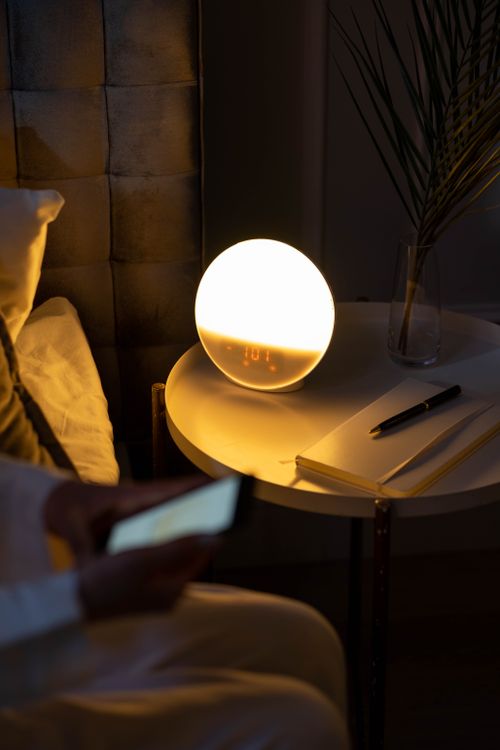 A dry week mostly measures withdrawal. A dry month starts to measure your actual baseline — which is why the 30-day mark keeps appearing in the sleep literature.
Name it to your prescriber
Most clinicians won't know how much you drink unless you say so, and it changes what they prescribe — particularly around sleep and anxiety medication. One honest sentence changes the plan.
Ask about naltrexone by name
It's underprescribed relative to its evidence, and reduction rather than abstinence is a legitimate goal to state out loud. You are allowed to raise a medication your clinician hasn't mentioned.
Treat the sleep properly
CBT-I has better long-term evidence for chronic insomnia than any sedative, and it's the realistic replacement for a nightly drink used as a sleep aid.
Don't wait for a rock bottom
The idea that things must get bad enough first has no basis in the treatment evidence and costs people years. Earlier intervention works better, not worse.
Get the depression treated in parallel
NIAAA is explicit that waiting for sobriety isn't required when there's evidence of need. If you've been told otherwise, it's reasonable to ask again or seek another opinion.
Expect week one to be misleading
Worse sleep and higher anxiety early on are rebound, not evidence the alcohol was helping. Knowing that in advance is most of what gets people through it.
Where to Find Reliable Help
- NIAAA Core Resource on Alcohol — Mental Health Issues and Co-occurring Conditions, the clinical source behind much of this article.
- NIAAA Alcohol Treatment Navigator, a federal tool for finding quality treatment and knowing what questions to ask.
- NIAAA — Understanding Alcohol Drinking Patterns, for the definitions cited here.
- FindTreatment.gov and the SAMHSA National Helpline — free, confidential, 24/7 at 1-800-662-4357.
- NIMH — Substance Use and Co-Occurring Mental Disorders.
Frequently Asked Questions
Can I drink while taking an antidepressant?
This is a conversation for your prescriber rather than an article, because the answer depends on which medication, what dose, how much you drink, and what else you take. A few general points do hold: alcohol is a depressant and can work against what the antidepressant is doing, it can amplify sedation with many psychiatric medications, and the combination can worsen the sleep disruption that often drives both. What's clear is that the honest version of the question gets you a better answer than the cautious version — a prescriber who thinks you drink twice a month will advise differently than one who knows it's most evenings.
Is my depression causing the drinking, or the other way around?
Often genuinely both, and usually impossible to disentangle retrospectively. NIAAA describes the relationship as bidirectional, with shared genetic and environmental contributors. The more useful news is that the answer matters less than it feels like it should: integrated treatment of both is recommended regardless of which came first, so you don't need to solve the origin question before anything can be done.
I only drink two or three glasses of wine in the evening. Is that a problem?
By NIAAA's definitions, three drinks in an evening most nights would put a woman into the heavy-drinking range and a man close to it, and NIAAA also notes that harms can be associated with any amount. But the more useful test isn't the number — it's the effects. If you're waking at three in the morning, feeling anxious in the mornings, or finding that cutting back is harder than you expected, those are the signals worth acting on, and they often show up well before anyone would call it a disorder.
Is it safe to just stop drinking?
For light or occasional drinking, generally yes. For heavy daily drinking, no — alcohol withdrawal can cause seizures and delirium tremens and is one of the few withdrawal syndromes that can be fatal. Anyone drinking heavily every day should involve a clinician in how they stop. Medically supervised withdrawal is routine and much safer than attempting it alone, and needing it is not a measure of how bad the problem is.
Do I have to aim for complete abstinence?
Not necessarily, and this is one of the places where the treatment landscape lags behind the evidence. Naltrexone in particular works by reducing alcohol's reinforcing effect, which makes it useful for people whose goal is drinking less rather than not at all. For some people — especially those with severe dependence, liver disease, or a history of serious consequences — abstinence genuinely is the safer target, and a clinician should tell you if that's your situation. But "reduction" is a legitimate goal with medication behind it, not a half-measure.
Can I get this treated through telehealth?
Much of it, yes. Psychiatric evaluation, treatment of co-occurring depression or anxiety, and prescribing naltrexone or acamprosate all work well by video, and none of those medications is a controlled substance. The exception is medically supervised withdrawal, which requires in-person care — so if you're drinking heavily every day, that assessment comes first and may need to happen locally.
If You Need Help Right Now
If you're having thoughts of harming yourself, call or text 988 to reach the Suicide & Crisis Lifeline, available 24/7 across the United States, or chat at 988lifeline.org. Alcohol lowers inhibition and worsens low mood, and the risk of acting on those thoughts is meaningfully higher while drinking — which is a reason to reach out during a bad night rather than to wait until morning.
If you or someone else has signs of severe alcohol withdrawal — confusion, hallucinations, a seizure, severe tremor with a racing heart — or signs of alcohol poisoning, call 911. Both are medical emergencies.
A Practical First Step
If any of this landed, the useful next move is a number rather than a resolution. Our free, confidential screening tools include the AUDIT for alcohol use, along with the PHQ-9 for depression, the GAD-7 for anxiety, and the ISI for insomnia — which together give a clinician the whole picture rather than one piece of it.
A screening isn't a diagnosis, and nobody sees the result but you. What it does is turn something hard to say out loud into a score you can hand across.
How We Approach This
East Coast Telepsychiatry treats the psychiatric side of this picture by video: evaluating and treating depression, anxiety, PTSD and insomnia in people who drink, prescribing the non-controlled medications for alcohol use disorder — naltrexone and acamprosate — and reviewing whether anything you're currently taking is working against you. We will not ask you to get sober before we'll treat your depression, because the clinical guidance doesn't support that and it's the sequence most likely to fail.
Two honest limits. We don't provide medically supervised alcohol withdrawal, which needs in-person care — if you're drinking heavily every day, that assessment comes first and we'll help you find it rather than starting somewhere else. And our board-certified and licensed providers deliver psychiatric care; where intensive addiction treatment or structured behavioral therapy is the main thing you need, we'll say so. You can see our providers, the conditions we treat, and what care costs before booking anything.
Related Reading
Conditions We TreatDepression, anxiety, PTSD, insomnia and more Free ScreeningsAUDIT, PHQ-9, GAD-7, ISI and other validated tools Our ProvidersBoard-certified and licensed clinicians Insurance & CostWhat's covered and what care actually costs FAQsHow telepsychiatry works, start to finish Support OptionsWays to get help that fit your situationYou Don't Have to Sort the Drinking Out Before You Get Help
If you've been waiting until you'd dealt with the drinking to address the anxiety, the depression or the sleep — that order isn't required, and it isn't the one that works best. An evaluation can start from exactly where you are.
Schedule an Evaluation Browse ResourcesSources & Further Reading
- National Institute on Alcohol Abuse and Alcoholism. "Mental Health Issues: Alcohol Use Disorder and Common Co-occurring Conditions." Core Resource on Alcohol — comorbidity rates, bidirectionality, sleep effects, and the guidance on not deferring psychiatric treatment until sobriety.
- McPheeters M, O'Connor EA, Riley S, et al. "Pharmacotherapy for Alcohol Use Disorder: A Systematic Review and Meta-Analysis." JAMA, 2023;330(17):1653–1665. 118 trials, 20,976 participants.
- National Institute on Alcohol Abuse and Alcoholism. "Understanding Alcohol Drinking Patterns" — standard drink, binge and heavy drinking definitions.
- National Institute on Alcohol Abuse and Alcoholism. "The Basics: Defining How Much Alcohol is Too Much."
- "Anxiety and Alcohol Use Disorders: Comorbidity and Treatment Considerations." Alcohol Research: Current Reviews (NIAAA).
- de Visser R, University of Sussex. "Take part in Dry January and you'll reap the benefits for months, Sussex research shows" — over 6,000 participants; six-month follow-up. Note: participants were self-selected and outcomes self-reported, with substantial attrition at later follow-ups.
- Alcohol Change UK. "The evidence behind the Dry January challenge."
- Jonas DE, et al. "Pharmacotherapy for Adults With Alcohol Use Disorders in Outpatient Settings: A Systematic Review and Meta-analysis." JAMA, 2014.
- Maisel NC, Blodgett JC, Wilbourne PL, Humphreys K, Finney JW. "Meta-analysis of naltrexone and acamprosate for treating alcohol use disorders: when are these medications most helpful?" Addiction, 2013.
- National Institute of Mental Health. Substance Use and Co-Occurring Mental Disorders.
- NIAAA Alcohol Treatment Navigator; FindTreatment.gov.
- SAMHSA. National Helpline — 1-800-662-HELP (4357).
This article is for general educational purposes and does not constitute medical advice, diagnosis, or treatment. Drinking thresholds are included as a self-assessment reference drawn from NIAAA definitions, not as targets or as an indication that any level of drinking is safe for you — NIAAA notes that harms may be associated with any amount of alcohol. Alcohol withdrawal can be life-threatening: anyone who drinks heavily every day should not stop abruptly without medical guidance. Medication names appear for general education and do not indicate what is appropriate for you; do not start, stop, or change any prescribed medication on your own, and discuss alcohol use with the clinician who prescribes for you. East Coast Telepsychiatry does not provide medically supervised alcohol withdrawal. If you are experiencing a mental health emergency, call or text 988; for signs of severe withdrawal or alcohol poisoning, call 911.
Helpful next steps
- Learn about anxiety disorders
Symptoms, treatment options, and when to seek professional support.
- Learn about depression
Understand common symptoms and evidence-based treatment approaches.
- Learn about PTSD
Find information about trauma symptoms and available care.