Caregiver Burnout and Depression: What Actually Helps
Tags: caregiver burnout, family caregivers, depression, caregiver research, health statistics

In brief
About 63 million Americans are family caregivers. This article explains why the often-repeated “63% higher mortality” figure is misleading and points to more nuanced, actionable research on caregiver burnout and depression.
Key takeaways
- Approximately 63 million Americans are family caregivers.
- The widely cited “63% higher mortality” statistic for caregivers is misleading without proper context.
- Research on caregiver burnout and depression is nuanced; risks and impacts vary and cannot be captured by a single figure.
- The article emphasizes practical, research-informed ways that may help reduce caregiver burnout and depression.
- Understanding study design and context helps caregivers and supporters make more informed decisions.
 Caregiver Mental Health
Caregiver Burnout and Depression: What Actually Helps, and Why the "63% Higher Mortality" Statistic Is Misleading
Sixty-three million Americans are family caregivers — nearly one in four adults. The research on what this does to them is more complicated than the figure you've seen quoted, and the complication is genuinely good news.
Medically reviewed by: [[REVIEWER NAME + CREDENTIALS — PENDING CLINICAL SIGN-OFF]]
About our providers | Last updated: November 5, 2026 | Reading time: 15 minutes
Most people doing this work don't call themselves caregivers. They call it helping Mom. Checking on Dad. Managing my husband's appointments. The word arrives later, usually from a social worker or a form, and by then the arrangement has often been going on for years — the medication lists memorized, the phone always within reach, the slow narrowing of a life around someone else's needs.
November is National Family Caregivers Month, which means the next few weeks will produce a lot of appreciation and a certain amount of advice about self-care. Some of that advice is worth having. A good deal of it amounts to telling an exhausted person to find time they don't have.
This article takes a different approach. It looks at what the research actually establishes about caregiver mental health — including a widely repeated statistic that turns out to be more nuanced than its popular version — and at which interventions have evidence behind them. The short version: the danger isn't caregiving itself. It's unsupported strain. And unlike caregiving, strain is something that can be changed.
63MAmericans providing family care — nearly 1 in 4 adults +20MIncrease in family caregivers between 2015 and 2025 1 in 3Also raising a child under 18 while caregiving $7,200Average out-of-pocket cost per caregiver per yearWho Actually Counts as a Caregiver?
Short answerIf you provide unpaid help to an adult family member or friend with a health condition, disability, or the effects of aging, you're a family caregiver — whether or not you live with them, whether or not it's hands-on physical care, and whether or not anyone has ever used the word about you. Coordinating appointments, managing medications, handling finances, and being the person who gets the phone call all count.
This definitional point matters more than it sounds like it should, for a practical reason: people who don't identify as caregivers don't look for caregiver support, don't mention it to their doctor, and don't qualify themselves for programs built for them.
The 2025 Caregiving in the U.S. report from AARP and the National Alliance for Caregiving put the number at 63 million Americans, up 20 million in a decade. Nearly one in four provides 40 or more hours of care a week — a full-time job, usually on top of an actual job. A third have been doing it for five years or more.
The financial picture is similarly under-discussed. Caregivers spend roughly $7,200 a year out of pocket on average, and nearly half report at least one major financial consequence — taking on debt, stopping savings, or being unable to afford food. One in five rates their own health as fair or poor, and nearly one in four says caregiving makes it hard to look after their own health at all.
Is Caregiver Burnout the Same Thing as Depression?
Short answerNo, though they overlap and burnout can develop into depression. Burnout is exhaustion, emotional depletion, and detachment tied specifically to a role — it tends to ease when the demands ease. Depression is a clinical condition that follows you into the parts of life that have nothing to do with caregiving, persists when you do get a break, and often includes hopelessness, worthlessness, or thoughts of death. The distinction matters because the treatments differ.
| Caregiver burnout | Depression | |
|---|---|---|
| What it attaches to | The caregiving role specifically — dread about the next shift, resentment, emotional numbness toward the person | Everything. Work, friendships, interests unrelated to caregiving all flatten out |
| Response to a real break | Improves, sometimes substantially, with genuine respite | Persists through the break. A week away doesn't lift it |
| Characteristic thoughts | "I can't keep doing this." "I'm not good at this anymore." | "I'm worthless." "Nothing will ever be different." Thoughts of death or self-harm |
| What tends to help | Reduced load, respite, practical support, skills training, boundaries | Those things plus clinical treatment — therapy, medication, or both |
In practice the two frequently coexist, and you don't need to sort out which one you have before asking for help. But if you've had a stretch of real relief — the other sibling took two weeks, your spouse went into respite care — and you felt no better, that's a meaningful piece of clinical information rather than evidence that you're ungrateful.
 Most family caregivers never apply the word to themselves — which is part of why so few of them access programs designed for exactly their situation.
Does Caregiving Actually Shorten Your Life?
Short answerProbably not, for most people — and the famous statistic saying otherwise has been widely misreported. The 1999 study behind it found elevated mortality only among spousal caregivers who reported emotional strain (relative risk 1.63, with a confidence interval of 1.00 to 2.65 — the lower bound sitting exactly at the threshold of significance). Caregivers who did not report strain showed no meaningful elevation. Since then, multiple large studies and meta-analyses have found caregivers overall have the same or lower mortality than non-caregivers.
This deserves unpacking, because the "caregiving kills you" framing is repeated constantly — including by organizations trying to help — and it frightens people who are already frightened.
The source is Schulz and Beach's Caregiver Health Effects Study, published in JAMA in 1999. It followed 819 older adults, including 392 spousal caregivers, over roughly four and a half years. The finding that became famous applied to one subgroup: caregivers of a disabled spouse who reported mental or emotional strain. For them, adjusted relative risk of death was 1.63. For caregivers who reported no strain, it was 1.08 — statistically indistinguishable from non-caregivers.
So the original study's actual claim was narrower and more interesting than its popular version: strain predicted mortality, not caregiving. And even that finding was borderline, with a confidence interval whose lower edge touched 1.00.
What the Evidence Has Shown Since
Roth et al. meta-analysis Pooled across studies, caregivers showed roughly 16% lower mortality than non-caregivers — a pattern the authors themselves describe as seemingly paradoxical. Janson et al., 2022 A systematic review of 22 studies: caregivers overall had significantly lower mortality, while elevated risk clustered specifically among those reporting high psychological burden and distress. Leggett et al., 2020 Among 10,650 married adults aged 51+, dementia caregiving was associated with a lower hazard of death than non-caregiving spouses — most strongly among caregivers in poorer self-rated health. Gaugler et al., 2018 Across 463 spousal pairs followed up to 17 years, about 72% of caregivers did not die before the person with dementia, and caregivers outlived their partners on average.Two explanations are usually offered, and both are probably partly right. The first is a health-selection effect: people healthy enough to take on caregiving are, on average, healthier to begin with, which inflates the comparison in caregivers' favor. The second is that caregiving itself supplies things that protect health — purpose, structure, daily activity, a reason to stay engaged. Neither explanation makes the strain less real.
What this adds up to is not "caregiving is fine." It's that the thing associated with harm is identifiable and specific: strain, isolation, and lack of support — particularly for sole caregivers with no one else nearby. Those are modifiable. A fate is not. The research is pointing at an intervention target, not a prophecy.
The Finding That Should Change How This Gets Funded
Short answerA 2017 study in PNAS found that poor caregiver mental health independently predicted earlier death in the patient with neurodegenerative disease — after adjusting for diagnosis, age, disease severity, and the patient's own mental health. Those patients died roughly 14 months sooner on average. Caregiver mental health is not a side issue adjacent to the patient's care. It appears to be part of it.
This is the argument that tends to land when nothing else does, including with caregivers themselves — who will often decline help for their own sake and accept it for the sake of the person they're caring for.
The reasoning is not mysterious. A depressed, exhausted caregiver monitors symptoms less closely, catches problems later, manages complex medication schedules less reliably, and has less capacity for the hundred small interventions that keep someone stable at home. None of that reflects a failure of devotion. It reflects what depression does to attention, energy, and executive function.
If you've been telling yourself that looking after your own mental health is a luxury you'll get to later, this is the finding worth sitting with: the evidence suggests it may be part of the care you're trying to provide.
What Actually Helps — and What Doesn't
Short answerStructured, multi-component programs with evidence behind them — education plus skills training plus support, delivered over months rather than handed out as a pamphlet. The REACH family of interventions is the best-studied example. What doesn't work is generic self-care advice: telling someone with no uncovered hours to take time for themselves identifies a real problem and offers nothing that addresses it.
The most useful evidence comes from REACH II and its real-world translation, REACH VA, which the Veterans Health Administration implemented across 24 Home-Based Primary Care programs in 15 states. The intervention ran six months: nine one-hour home visits, three half-hour phone sessions, and five monthly telephone support groups, with content tailored by a risk assessment across safety, social support, problem behaviors, depression, and caregiver health.
Results, measured from baseline to six months in 127 caregivers: burden improved by 2.88 points on the Zarit scale, depression symptoms by 1.49 points, and caregiving frustrations and troubling patient behaviors both declined. Nearly 98% of caregivers reported a general benefit and 96% said the VA should offer the program.
Those are real results and they deserve their caveats stated plainly, which the authors provide: effect sizes were small to moderate, there was no control group in the VA translation, and about 23% of enrolled caregivers lacked follow-up data. A reported reduction of roughly two hours a day "on duty" did not reach statistical significance. This is promising implementation evidence, not a cure.
Respite that's actually usable
Not "take a break" but a concrete arrangement — adult day programs, in-home aide hours, short-stay facility respite. The ARCH National Respite Locator lists services by state.
Skills training, not just education
Knowing what dementia is helps less than knowing what to do when someone refuses to bathe. The programs with evidence teach specific responses to specific situations.
Treating your own depression
Caregiver depression responds to the same treatments as any other depression. "It's situational" is not a reason to leave it untreated, particularly when the situation will last years.
A second person
Research on hospice families found that being the only nearby family member was an independent mortality risk factor, while having other family in the same state was protective. Distributing the load is not a favor to you — it's risk reduction.
The Area Agency on Aging
Most people have never heard of these and they are the front door to publicly funded support. Eldercare Locator connects you to yours.
Naming it to your own doctor
Most clinicians won't know you're a caregiver unless you say so, and it changes what they should be screening you for. One sentence at your next appointment.
The Sandwich Generation Problem
Short answerNearly one in three family caregivers is also raising a child under 18 — rising to 47% of caregivers under 50. These caregivers carry two sets of obligations with no slack between them, and the load falls unevenly: 43% of Latino caregivers and 36% of Black caregivers are in this position.
What makes this group distinctive isn't just the volume of work. It's the absence of recovery time. A parent of young children has demands that don't pause; a caregiver for a declining adult has demands that escalate. Occupying both roles means there's no interval in which either load lightens, and the usual advice about carving out time collides with arithmetic.
For people in this position, the realistic intervention is usually not better time management. It's reducing the total load — paid help for some hours, a sibling taking a defined piece, adult day programming, a frank conversation about what is going to go undone. That conversation is easier with a clinician or social worker in the room than alone at the kitchen table at midnight.
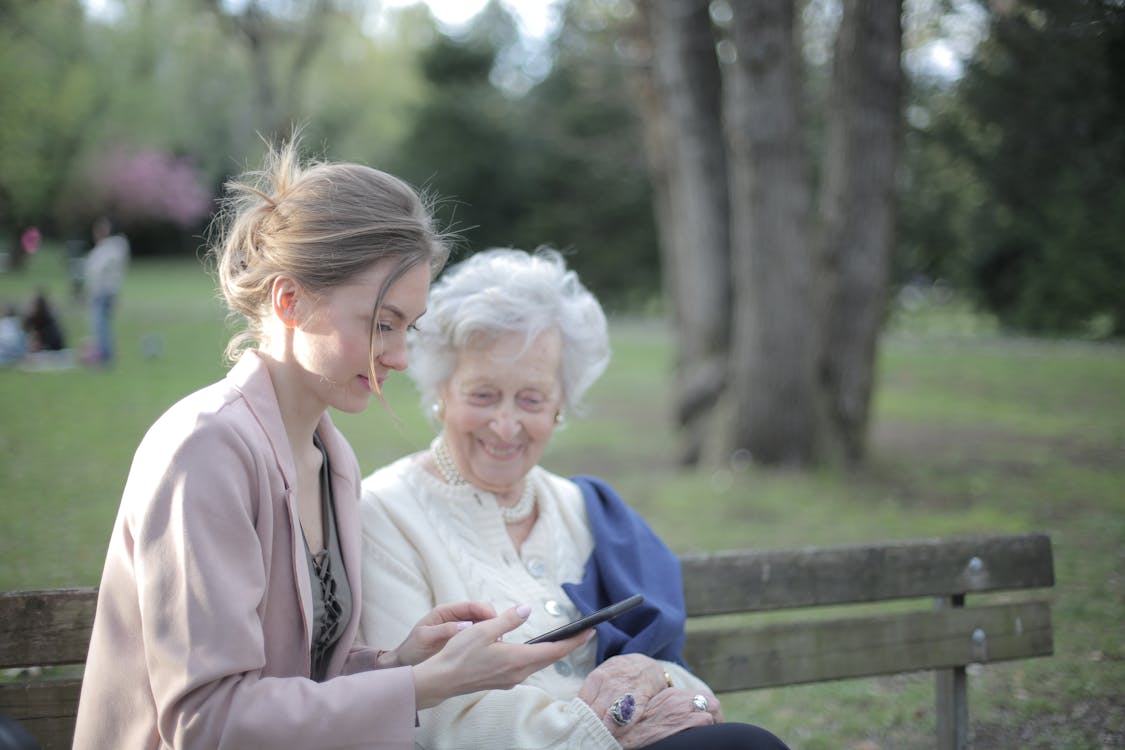 The practical barrier to caregiver mental health care is usually not willingness. It's that leaving the house for an appointment requires arranging coverage.
What a Real Support Plan Contains
- A named second person. Not "the family helps" — a specific person with a specific recurring commitment, written down.
- Scheduled respite, on the calendar. Unscheduled respite doesn't happen. Recurring beats occasional.
- Your own clinician, who knows you're a caregiver. Stated explicitly, so it's in your chart and informs your screening.
- A plan for the predictable crisis. A fall, a hospitalization, a sudden decline. Deciding in advance beats deciding at 2 a.m.
- Contact with your Area Agency on Aging. One call to find out what you're eligible for that you don't know about.
- A legal and financial baseline. Power of attorney, advance directives, and an understanding of what's covered. Unresolved, these generate chronic background dread.
- One thing that is only yours. Modest and recurring beats ambitious and theoretical.
- A defined review point. Caregiving changes. A plan built for last year's needs quietly stops fitting.
When Is It Time to Get Professional Help?
Short answerSooner than most caregivers think. Specific signals: low mood that persists through a genuine break, sleep that stays broken when you have the chance to sleep, drinking more to get through evenings, resentment or anger toward the person you're caring for that distresses you, thoughts that they or you would be better off dead, or a sense that you can no longer do this safely. The last two warrant same-week attention.
Two beliefs keep caregivers out of treatment, and both deserve direct answers.
The first is that the feelings are justified by circumstance, so treating them is somehow dishonest. Depression that has an understandable cause is still depression, and it responds to treatment. Circumstances explain why it developed; they don't determine whether it can improve.
The second is logistical and more real: getting to an appointment requires arranging coverage, which is the scarce resource in the first place. This is where video appointments genuinely change the calculation — an evaluation from your own kitchen while the person you care for naps in the next room is a different proposition from a two-hour round trip with a paid aide to cover it.
Where to Find Reliable Help
- Eldercare Locator — the federal front door to local services, at 1-800-677-1116. Start here if you start anywhere.
- ARCH National Respite Locator, for state-by-state respite services.
- Family Caregiver Alliance, which maintains practical fact sheets and state-specific resource listings.
- Alzheimer's Association caregiving resources, including a 24/7 helpline at 1-800-272-3900.
- National Family Caregiver Support Program, the federal program that funds state and local caregiver services.
- SAMHSA National Helpline — free, confidential, 24/7 at 1-800-662-4357.
Frequently Asked Questions
Is it normal to feel resentment toward the person I'm caring for?
It's extremely common and it is not a verdict on your character or your love for them. Resentment generally tracks unsustainable load rather than deficient devotion — it tends to rise when support is thin and fall when it isn't. What it does function well as is a signal: persistent resentment usually means the arrangement needs changing, not that you need to try harder at feeling differently. If it's accompanied by anger you're worried about acting on, that's a reason to talk to a clinician promptly.
Does caregiving really increase my risk of dying early?
For most caregivers, the evidence doesn't support that. Multiple large studies and meta-analyses find caregivers have the same or lower mortality than non-caregivers, partly because healthier people are more likely to take the role on. The elevated risk in the research concentrates among caregivers reporting high strain, isolation, and lack of support — especially sole caregivers with no family nearby. That's worth knowing not as reassurance to dismiss but as direction: the risk factor is the strain, and strain can be reduced.
I can't leave the house. How am I supposed to get treatment?
This is the most common practical barrier and it's a solvable one. Psychiatric evaluation and medication management work well by video, which removes the coverage problem that stops most caregivers from seeking care. Many therapists also work remotely. It's worth raising coverage explicitly when you book — a 40-minute evening appointment is a different ask than a daytime slot requiring an aide.
Should I feel guilty about considering a facility?
The guilt is near-universal and the decision is usually more about capacity than devotion. Many families reach a point where the care required exceeds what one person can safely provide at home, and recognizing that is a form of good caregiving rather than an abandonment of it. If this is where you are, it's worth working through with a social worker or clinician rather than alone — partly for the practical guidance, partly because the guilt itself responds to being said out loud.
My siblings aren't helping. What can I actually do?
Uneven distribution is the norm rather than the exception, and the research on isolation suggests it's worth addressing rather than absorbing. What tends to work better than general appeals is a specific, bounded ask — one defined task, one recurring window, written down. Where that fails, a family meeting facilitated by a social worker or care manager shifts the conversation out of old sibling dynamics. Some families never redistribute, and in that case the realistic plan involves paid or community support rather than continued negotiation.
Is there financial help for caregiving?
More than most people realize, and it's poorly publicized. The National Family Caregiver Support Program funds services through state and local agencies; many state Medicaid programs have waivers that pay family caregivers; the VA has several caregiver support programs for veterans' families. Eldercare Locator is the fastest route to finding what applies where you live. Given that caregivers average around $7,200 a year out of pocket, one phone call is worth making.
If You Need Help Right Now
If you're having thoughts of harming yourself, call or text 988 to reach the Suicide & Crisis Lifeline, available 24/7 across the United States, or chat at 988lifeline.org.
If you're having thoughts of harming the person you care for, or you're frightened by your own anger, that is also a reason to call 988 or speak to a clinician today. Those thoughts occur in exhausted, decent people under impossible load, and saying them out loud to someone trained to hear them is how they get addressed. If anyone is in immediate danger, call 911.
A Practical First Step
If you've read this far recognizing yourself, a structured baseline is a useful thing to bring to a first appointment — particularly because caregivers tend to underreport in conversation and answer written questions more honestly. Our free, confidential screening tools include the PHQ-9 for depression, the GAD-7 for anxiety, and the ISI for insomnia, which is often the first thing to go.
A screening isn't a diagnosis. What it does is give you something concrete to point at, which is easier than finding the words for this from scratch.
How We Approach This
Caregiver depression, anxiety, and insomnia are squarely within what East Coast Telepsychiatry does: psychiatric evaluation, diagnosis, and medication management by video. The video part is not incidental here — the single most common reason caregivers don't get treatment is that leaving the house requires arranging coverage, and an appointment from your own home removes that barrier.
Two honest notes on scope. We treat the caregiver, not the care recipient's condition — we're not a dementia care service, and where the need is case management, respite arrangement, or navigating long-term care, an Area Agency on Aging or a geriatric care manager will serve you better than we will, and we'll say so. And our board-certified and licensed providers deliver psychiatric care; where structured caregiver skills training or family therapy is the main thing needed, we'll help you find it rather than treating medication as a substitute for support that doesn't exist yet. You can see our providers, the conditions we treat, and what care costs before booking anything.
Related Reading
Conditions We TreatDepression, anxiety, insomnia, grief and more Free ScreeningsPHQ-9, GAD-7, ISI and other validated self-assessments Our ProvidersBoard-certified and licensed clinicians Insurance & CostWhat's covered and what care actually costs FAQsHow telepsychiatry works, start to finish Support OptionsWays to get help that fit your situationYou Don't Have to Leave the House to Get Seen
The barrier for most caregivers was never willingness — it was coverage. An evaluation by video, from your own home, while the person you care for is settled, is a different kind of ask.
Schedule an Evaluation Browse ResourcesSources & Further Reading
- AARP and the National Alliance for Caregiving. Caregiving in the U.S. 2025, July 2025 — 63 million family caregivers, up 20 million since 2015.
- National Alliance for Caregiving. "New Report Reveals Crisis Point for America's 63 Million Family Caregivers" — hours, financial impact, isolation and sandwich-generation figures.
- Schulz R, Beach SR. "Caregiving as a Risk Factor for Mortality: The Caregiver Health Effects Study." JAMA, 1999;282(23):2215–2219. RR 1.63 (95% CI 1.00–2.65) in strained spousal caregivers; RR 1.08 in caregivers without reported strain.
- Roth DL, et al. "Reduced Mortality Rates Among Caregivers: Does Family Caregiving Provide a Stress-Buffering Effect?" Psychology and Aging, 2018.
- Mehri N, Kinney J, Brown S, Rajabi Rostami M. "Informal Caregiving and All-Cause Mortality: A Meta-Analysis of Longitudinal Population-Based Studies." Journal of Applied Gerontology, 2021.
- "Do Caregivers Really Die Before Their Loved Ones? What the Science Actually Says" — review collating the Janson 2022, Leggett 2020, Gaugler 2018, Brown 2009 and Hollingshaus 2024 findings cited here.
- Lwi SJ, Ford BQ, Casey JJ, Miller BL, Levenson RW. "Poor caregiver mental health predicts mortality of patients with neurodegenerative disease." PNAS, 2017.
- Nichols LO, Martindale-Adams J, Burns R, Graney MJ, Zuber J. "Translation of a Dementia Caregiver Support Program in a Health Care System—REACH VA." Archives of Internal Medicine, 2011;171(4):353–359.
- Belle SH, et al. "Enhancing the Quality of Life of Dementia Caregivers from Different Ethnic or Racial Groups: Findings from REACH II."
- Administration for Community Living. National Family Caregivers Month, and the National Family Caregiver Support Program.
- Eldercare Locator — 1-800-677-1116. ARCH National Respite Locator.
- SAMHSA. National Helpline — 1-800-662-HELP (4357).
This article is for general educational purposes and does not constitute medical advice, diagnosis, or treatment. The research on caregiver mortality discussed here is observational and its findings describe populations rather than individuals; nothing in it should be read as a prediction about any particular person, or as a reason to delay care for symptoms that concern you. Caregiver depression and anxiety are treatable conditions — the fact that circumstances explain them does not mean they should go untreated. East Coast Telepsychiatry provides psychiatric care to caregivers and does not provide case management, respite arrangement, or long-term care navigation. If you are experiencing a mental health emergency, or you are worried about your own or someone else's safety, call or text 988 or dial 911.
Helpful next steps
- Learn about anxiety disorders
Symptoms, treatment options, and when to seek professional support.
- Learn about depression
Understand common symptoms and evidence-based treatment approaches.
- Learn about ADHD
Explore adult ADHD symptoms, evaluation, and treatment.